
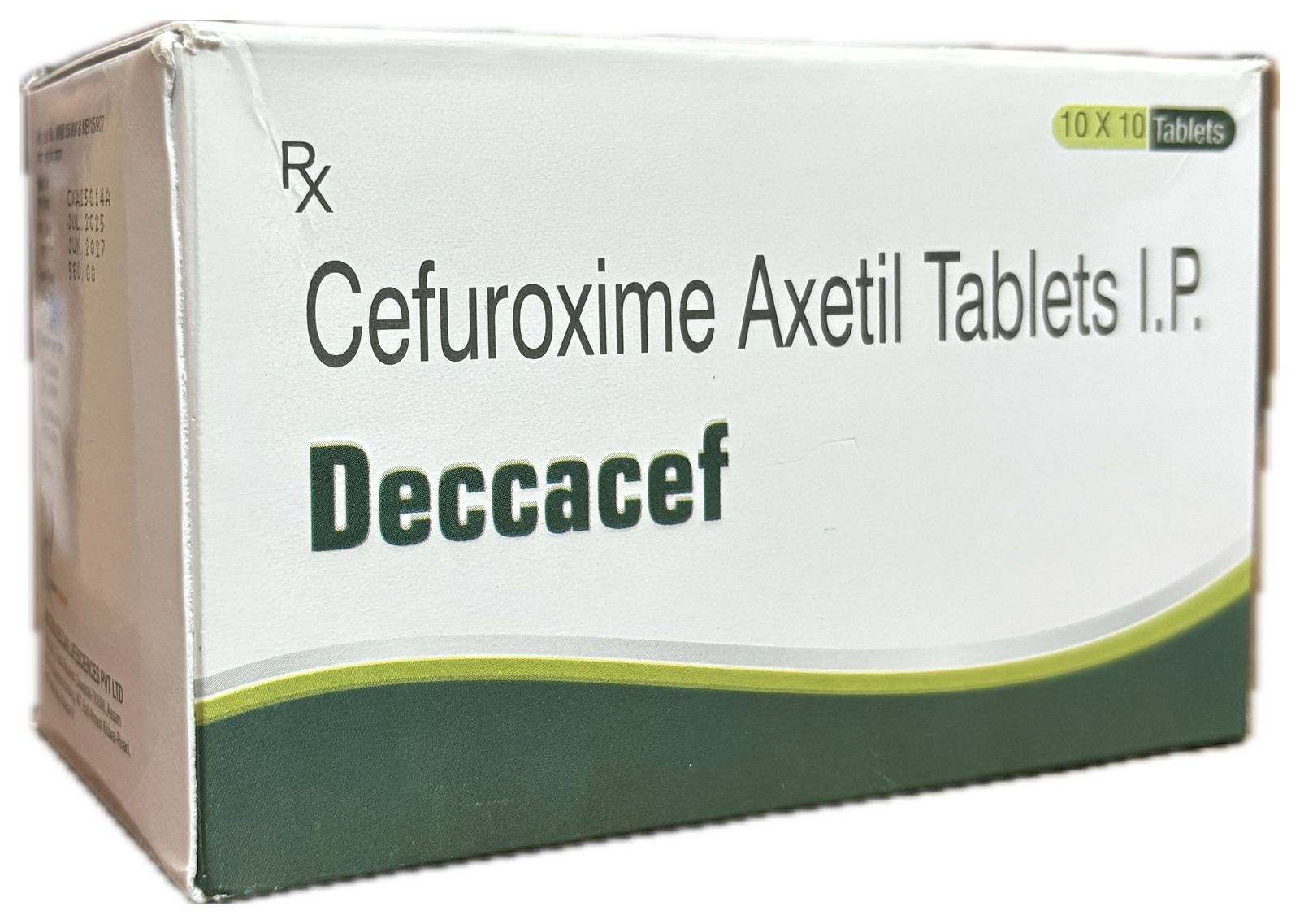
DECCACEF
AN UNIQUE ALLROUNDER ANTIBIOTIC
cefuraxime axetil Introduction
Cefuroxime Axetil , Deccacef is a second-generation cephalosporin antibiotic. It is a broad-spectrum antibiotic, meaning it is effective against a wide variety of bacteria. It works by disrupting the formation of the bacterial cell wall, ultimately killing the bacteria.
Indications (Uses)
It is prescribed to treat bacterial infections, including:
Respiratory Infections: Pharyngitis (sore throat), tonsillitis, sinusitis, and acute bronchitis.
Ear Infections: Otitis media (middle ear infection).
Skin Infections: Uncomplicated skin and soft tissue infections (e.g., impetigo).
Urinary Tract Infections (UTIs): Early-stage or uncomplicated bladder infections.
Lyme Disease: Early-stage Lyme disease (erythema migrans).
Gonorrhea: Uncomplicated gonorrhea (often as a single dose).
Dosage Guidelines
Always follow the specific instructions on your prescription label.
Adults: Typically 250 mg or 500 mg taken orally every 12 hours. Duration usually ranges from 5 to 10 days, though Lyme disease treatment lasts 20 days.
Children: Dosage is usually calculated by weight (e.g., 20–30 mg/kg/day) divided into two doses.
How to Take:
Tablets: Swallow whole (do not crush due to bitter taste). Absorption is significantly better when taken with food.
Suspension: Must be taken with food. Shake well before measuring.
Benefits
Resistance Fighter: It is stable against many beta-lactamases (enzymes produced by bacteria to resist antibiotics), making it effective where some penicillins might fail.
Convenience: The twice-daily dosing schedule is easier to remember than antibiotics requiring 3–4 doses per day.
Versatility: Treats both Gram-positive and Gram-negative bacteria effectively.
Cautions
Allergies: Do not take if you are allergic to cephalosporins. Use extreme caution if you have a severe penicillin allergy (cross-reactivity can occur).
Kidney Function: Dosage adjustments may be required for patients with renal impairment.
Gut Health: Patients with a history of colitis should use this drug with caution.
Phenylketonuria (PKU): The liquid suspension form may contain phenylalanine.
Drug-Drug Interactions
Antacids & Acid Reducers: Drugs that reduce stomach acid (like PPIs or H2 blockers) can lower the absorption of Cefuroxime. Take Cefuroxime at least 1 hour before or 2 hours after antacids.
Oral Contraceptives: May decrease the effectiveness of birth control pills. Use a backup non-hormonal method during treatment.
Probenecid: Increases the levels of Cefuroxime in the blood (sometimes used intentionally for this effect).
Blood Thinners: Can affect blood clotting parameters; monitoring may be needed if taking Warfarin.
Side Effects
Common:
Diarrhea / Loose stools
Nausea or vomiting
Vaginal yeast infections (due to disruption of normal flora)
Bitter taste in mouth
Serious (Seek medical help):
Severe Allergic Reaction: Hives, swelling of the face/throat, difficulty breathing.
C. Difficile Colitis: Severe, watery, or bloody diarrhea with abdominal cramping (can occur weeks after treatment ends).
Severe Skin Rash: Peeling or blistering skin